
Differences Between Vape Pod Devices and Other Vaping Devices: Complete UK Guide 2025
By Asif Iqbal ·
Understanding the Vape or Pod Difference: Complete UK Guide 2025
🔍 Quick Summary: Following the UK's disposable vape ban in June 2025, understanding the vape or pod difference helps you pick the right system. This guide covers design, nicotine delivery, performance, and costs to help you decide between compact pod systems and traditional vape devices.
Introduction to Vaping Device Types in 2025
The UK vaping landscape has transformed since the disposable vape ban on 1 June 2025. With single-use disposables gone, vapers increasingly turn to refillable alternatives—particularly pod systems and traditional devices like box mods, vape pens, and tanks. Pod devices use compact, replaceable pods holding e-liquid and built-in coils, while traditional vape devices use separate refillable tanks with replaceable coils for customization and power. Both offer legal alternatives post-ban, but they suit different vaping habits and preferences.
🚨 2025 UK Disposable Ban Impact
All single-use disposable vapes are now banned in the UK, making pod systems and refillable devices the primary legal alternatives for vapers seeking convenient, portable vaping solutions.
Difference Between Vape and Pod: Pod Device Basics
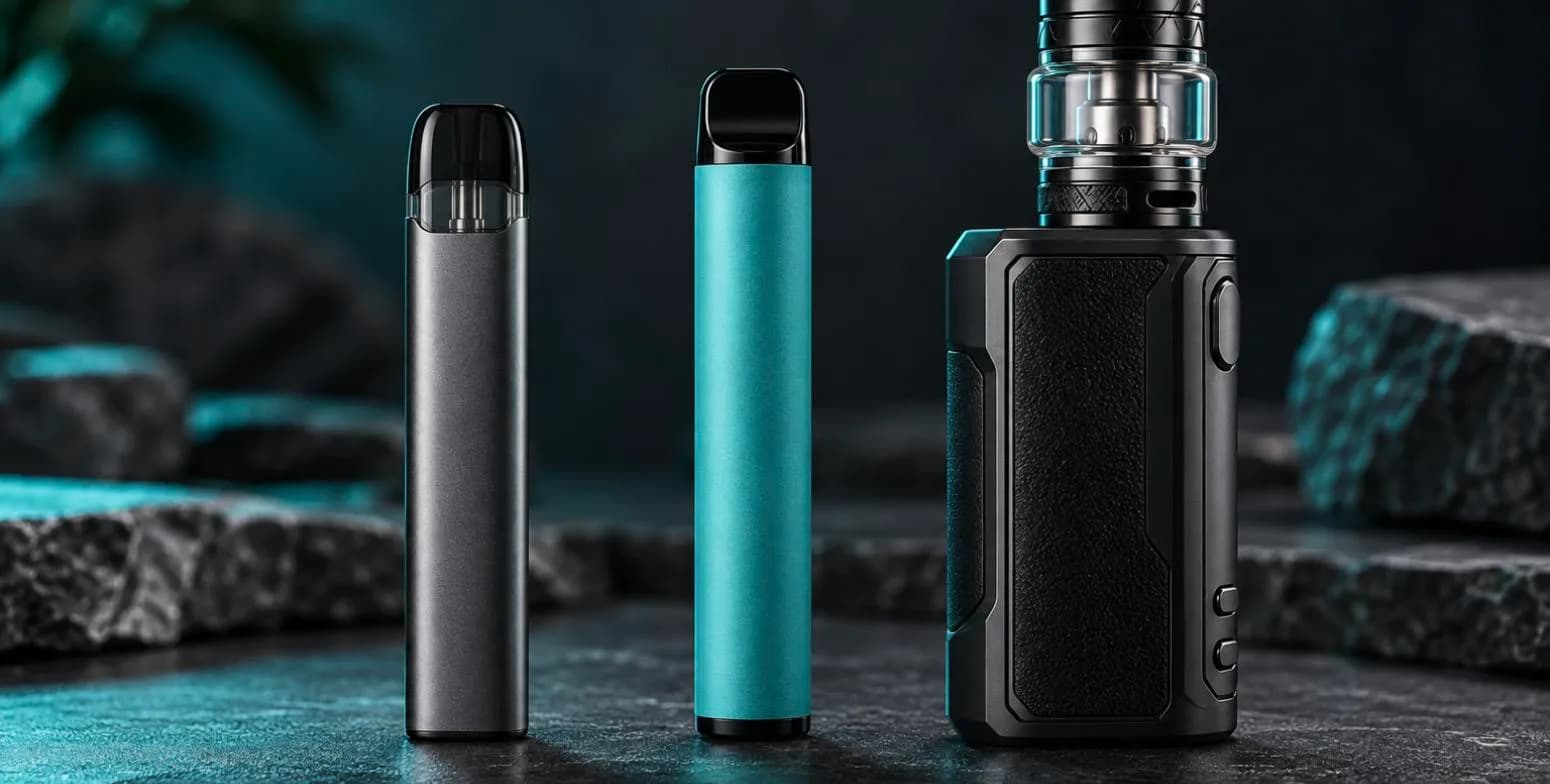
Pod devices are compact, user-friendly systems using replaceable or refillable pods containing e-liquid and built-in coils. When you compare a pod to a traditional vape, the simplicity stands out immediately. Pods are self-contained units that slot into a small battery, while traditional vapes require managing separate tank, coil, and battery components. The key difference is that pods consolidate everything into one small, disposable unit—the pod itself—whereas traditional vapes separate functionality across multiple components.
Most pod systems deliver nicotine via nic salts, which absorb into your bloodstream faster than freebase e-liquid. This is why you'll often see pod systems paired with 10mg or 20mg nicotine strengths—they deliver satisfaction quickly without needing the high wattage of larger vapes. The trade-off is less cloud production and a more discreet vape, but for many vapers that's exactly what they want.
Types of Pod Systems
Open Pod Systems (Refillable)
- Refillable pods that you fill with your choice of e-liquid
- Cost-effective long-term solution—fill from a bottle rather than buying new pods
- Wide range of e-liquid compatibility; use any brand or strength
- Typical lifespan: about one to three weeks per pod or coil, depending on how much you vape
- Examples: Uwell Caliburn series, Vaporesso XROS range
Closed Pod Systems (Pre-filled)
- Pre-filled pods with specific flavours and nicotine strengths already locked in
- Maximum convenience with no refilling required; slot in a fresh pod when the current one is empty
- Quality-controlled e-liquid formulations tested for performance
- Puff counts vary widely by system, so check the listing for each pod
- Examples: Elf Bar Elfa, VooPoo Argus P1, Hyola Ultra 30K Pre-filled Pods
Pod Mods (Hybrid Systems)
- Adjustable wattage larger than standard pods, giving you control over vapour and flavour intensity
- Replaceable coil systems for customization; swap coils to change performance
- Higher power output (up to 40-80W) produces more cloud than smaller pods
- Better for vapers who want flexibility without committing to a full box mod
- Examples: SMOK Nord series, Vaporesso Luxe PM40
What Are Traditional Vape Devices?
When people say "vape" in the traditional sense, they typically mean box mods, vape pens, or tube mods—all designed for higher power output and more customisation than pod systems. These devices pair with separate tanks (atomisers) that hold e-liquid, and you replace the coil inside the tank yourself. Traditional vapes require more setup knowledge but offer far greater flexibility in wattage, coil choice, e-liquid type, and vapour production. Many experienced vapers prefer them for this reason.
Like this? Tell Google you want more of it.